Shanghai, China: A Travelogue And a Reckoning
Drawing conclusions about a country is an extremely hard thing to do since countries are made up of more than just people—more than just the drivers, the staff of a hotel, families in a park—as friendly as they could be; they're also made of national ideals, culture, and military aspirations.
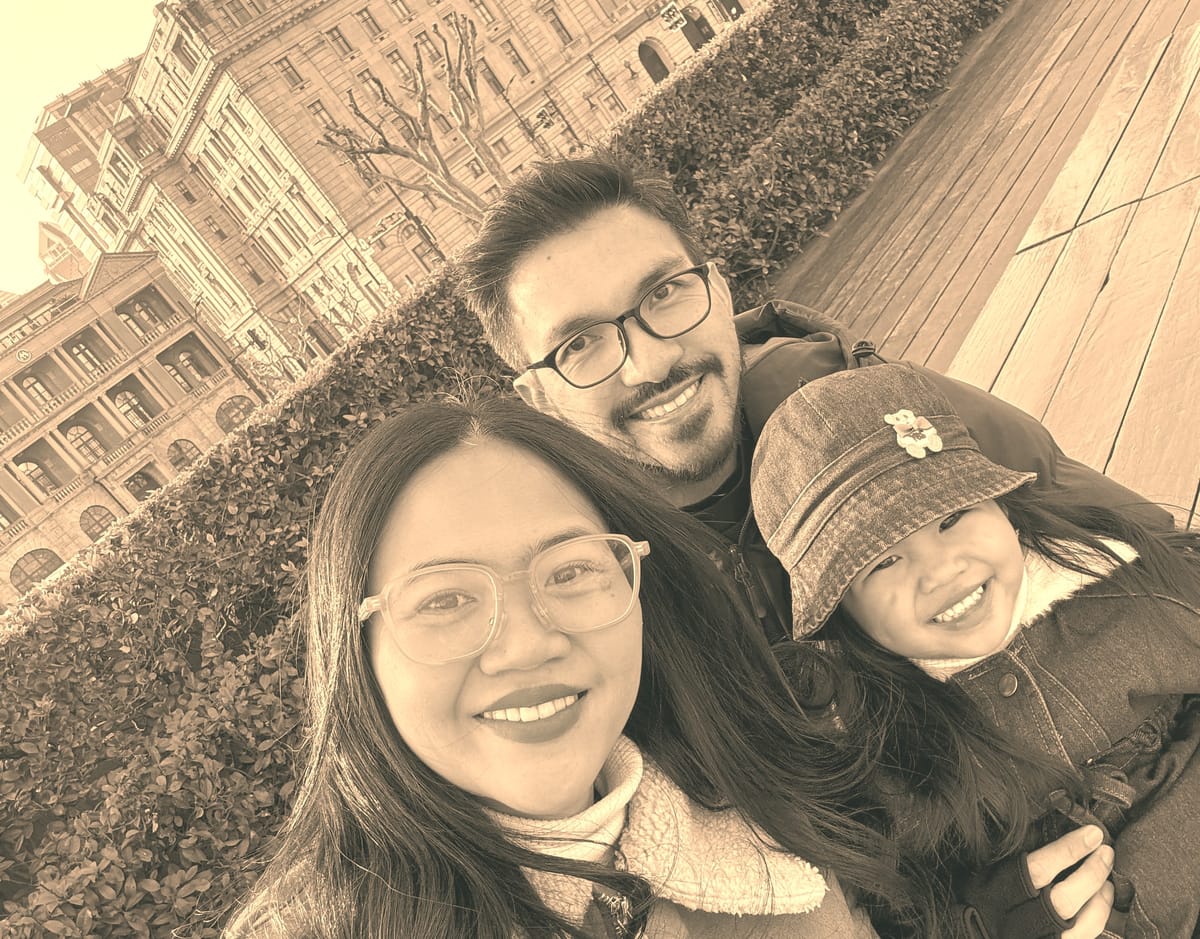
As a Filipino, it's hard to write anything about China without opening a giant can of worms. Posting anything remotely positive about the country could instantly get you a label from many: a "sympathizer," an "apologist," a "troll." Even the term "traitor" is swiftly brandished these days.
As I write about our personal experiences going on a family trip to Shanghai, there are suggestions to declare Chinese embassy officials in the Philippines persona non grata, and the officials are saying they are ready to shut down the embassy. This is, of course, rooted in the long-boiling dispute over the West Philippine Sea, which China has been lobbying to claim and has encroached upon with terrible consequences for Filipino fishermen and coastguard caught in the frontlines.
Amid all this, it's hard to write about that exquisite dinner of Peking duck we had along Nanjing Road.
But that's just what I'm going to do.
In this article, I will try to piece together my feelings for Shanghai, maybe for China itself, through little personal anecdotes from our 8-day trip.
The Elephant in The Room
I've always been intrigued by China. Here is a country commonly described as an Asian and global economic leader, more so than other advanced neighbors like Japan or South Korea—countries which are closer to Filipinos' hearts for various reasons (but if we're going to be honest about it, it's really mostly due to pop culture). China's nominal GDP is four times larger than Japan's, and it is consistently the largest merchandise exporter in the world.
Politically, it's a rougher picture. It's all about alliances, trust, an ability to sway people around the world; and so whether the country's a leader in this aspect depends on who you ask. In the Philippines, you'll hear a resounding "No."
But this two-fold picture of China is precisely why I wanted to take a peek. As a family, we have been to Japan and Taiwan three times, to South Korea once, and to other countries on top of those. Traveling overseas is always a kind of revelation, a glimpse into better societies we could have been, but for a litany of reasons, have not. Over and over, we have been blown away by their technological advancements, infrastructure, culture, the way their streets are lined by large businesses and brands that they own, not just imports.
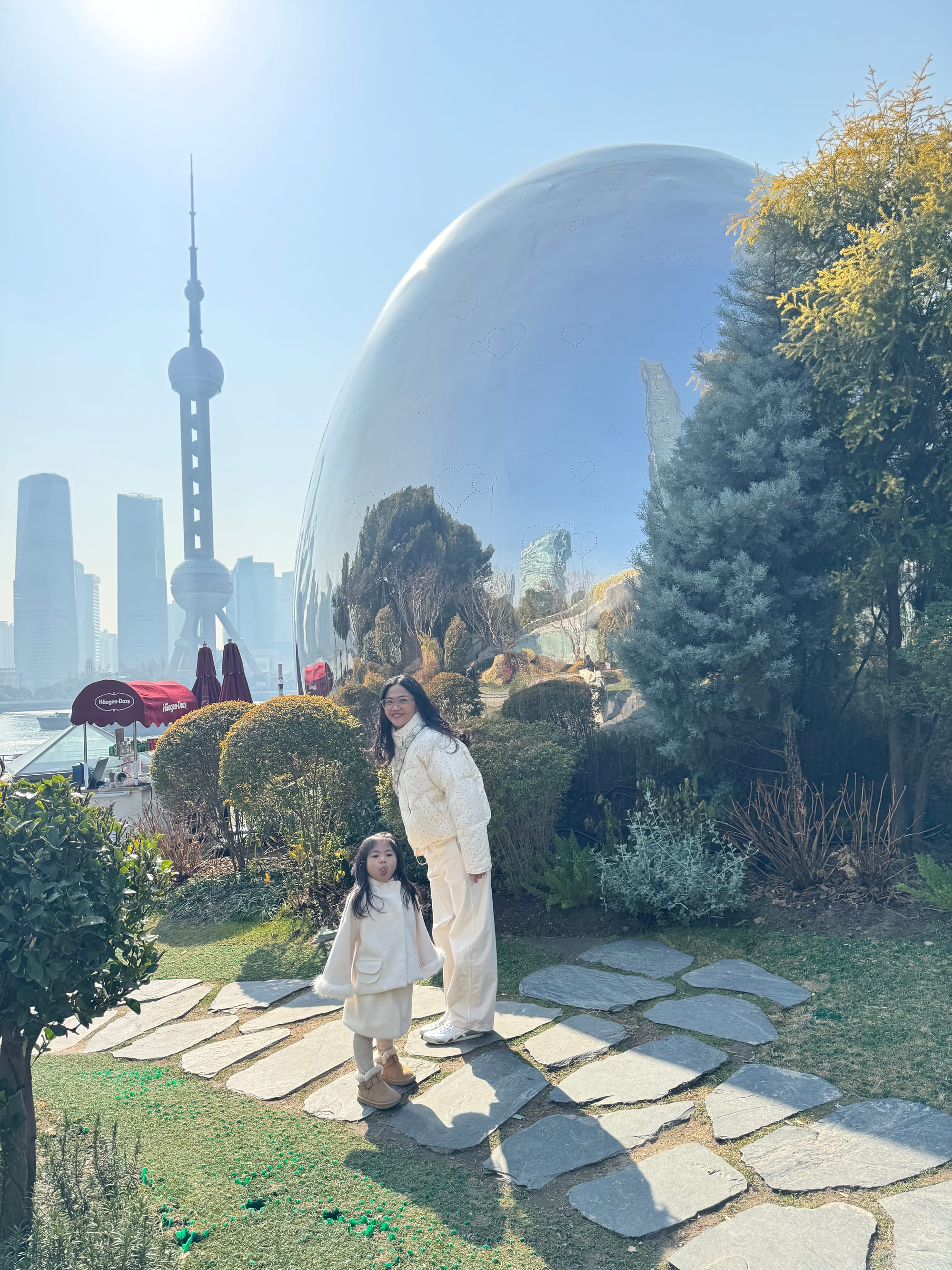
In all these travels, an immense elephant in the room had bothered me, begging me to look: China.
I told my wife, I just had to see. After all, nothing's really preventing Filipinos from visiting. In terms of complexity and fees, their visa processing is comparable with others. The fare is relatively cheaper, too. And yet, when you go to YouTube, you won't see as many Filipino influencers' videos about their China trips. No doubt, that has to do with the current political tension between the two nations, but also other things like some apps we are used to not working (by default) in China, such as Facebook, Instagram, and Google. A quick note: All of these work fine with a simple purchase of a China e-sim on Klook.
And while I've heard some bad reviews about places like Beijing, all I've heard about Shanghai—China's commercial and financial center—were great things, especially from my cousin who visited some years ago. It was just time to see for myself what this country has to offer.
Of Lights and No Lights and Hasty Generalizations
In Shanghai, practically all public fleets (taxis, buses, etc.) are electrified, and a great number of cars on the road are either electric or hybrids. I booked a Didi (their version of Grab/Uber), and we were seated comfortably in captain seats as the electric MPV (called a "Premium XL") silently zoomed across Shanghai's amazingly smooth and clean expressways. The fare was CNY 410 (PHP 3,500) for a 48 kilometer ride. Airport transfers in other countries are much more expensive.
Skyscrapers, some with futuristic architecture and striking light displays, towered on the horizon. Curiously, a lot of the buildings had their lights off. It was 1:00AM, but I remember Japan's cityscapes to be much brighter at this hour. Fast-forward, at around the same hour in Shanghai Pudong International Airport during our departure, it also struck us how relatively dimly lit the airport was even though it was impressively designed. I was reminded of a colleague who told me his Chinese bosses were extremely frugal, always turning off lights in the office when not in use.
I'm aware it's a hasty generalization about a people, and hasty generalizations are not an insignificant reason why things between nations are as they are... but I wondered about that silly thought, nevertheless.
As we neared our place, I also thought about what hasty generalizations the Chinese had about Filipinos, if there were any.
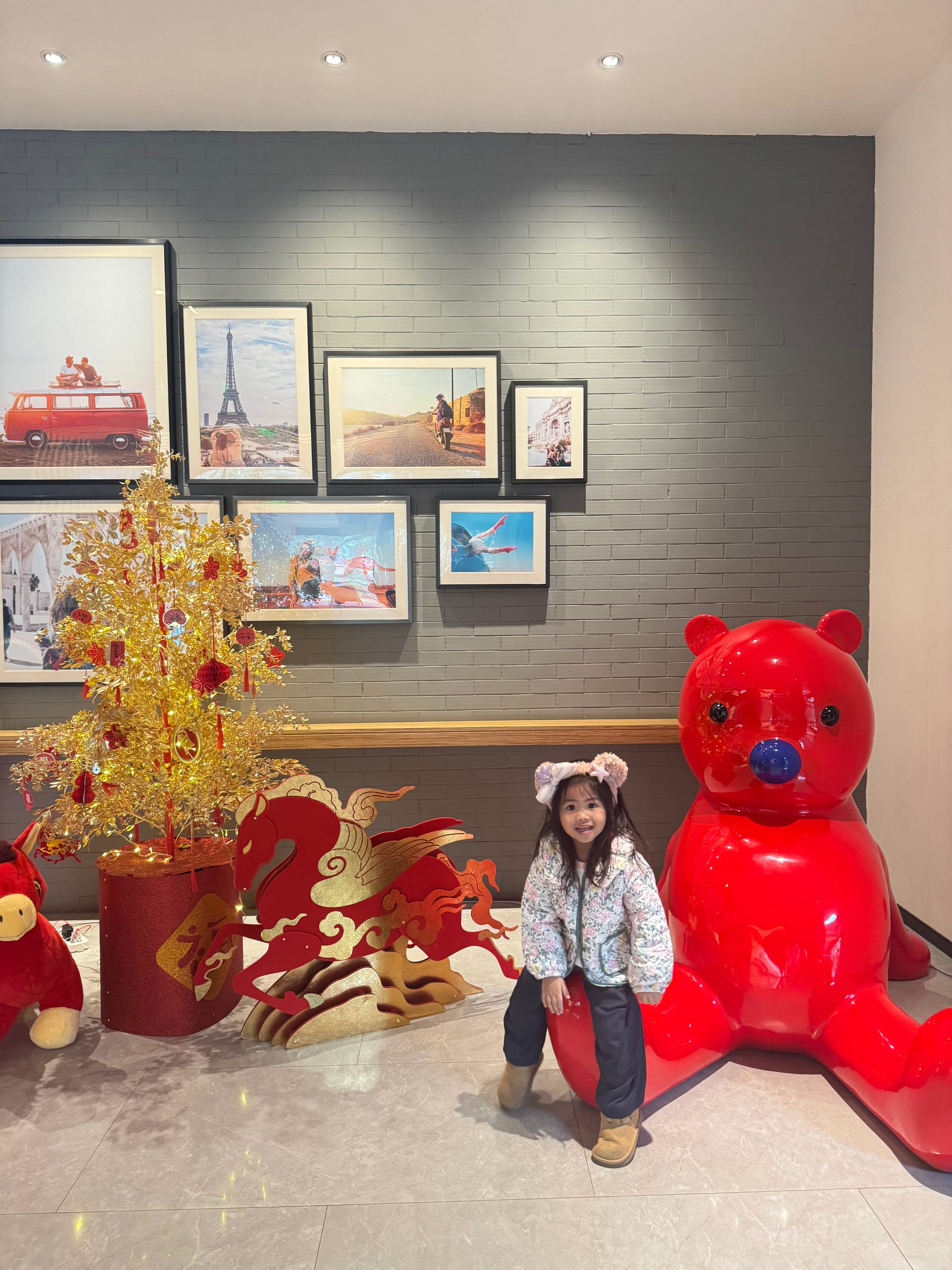
Airbnb isn't really an option in China, so hotels are your only choice. The one we booked, UrCove by Hyatt in Jing'an district, was a beautiful one. It has a large statue of a cute red bear at the entrance, and our daughter loved playing around it. The hotel staff and practically all Chinese we tried to talk to during our stay had zero to minimal understanding of the English language, but the systems in place to facilitate transactions (particularly QR codes for purchasing) make talking inefficient and unnecessary. For more nuanced requests, translation apps (I used Microsoft Translator) worked fine and the Chinese are used to dealing with tourists using their own translator apps. But for our first night, there happened to be one hotel staff who could speak a little bit of English, and that made checking in quite easy.
A Practical Aside: The Great Firewall and Payments
This is not intended to be an exhaustive account of how to visit China, but I’d be remiss not to discuss a few important technical details, since they do inform the overall experience. So let's get those out of the way.
Due to the Great Firewall, I did a lot of research prior to our visit to make sure we could connect to our social media and even do work when needed. As mentioned, installing and activating a China e-sim a few days before the trip ensured all the apps for posting our pictures and videos, and messaging our friends and family worked without a hitch even without a VPN. Logging into work for important meetings was trickier because using any local Wifi network could get you locked out of your accounts (due to software not recognizing China as a valid location for activity); and so for that, I subscribed short-term to a VPN, which I would set the location to Japan (because it's nearby) for better speeds as I hooked up my laptop to my phone, which served as the Wifi hotspot. This setup guaranteed everything worked.
Google products work with an e-sim, but I never relied on them because their data isn't updated and accurate anyway in China. For search, I used Bing. For navigation, I used Amap, which was fantastic for real-time directions.
They almost never use cash in Shanghai, incredibly, not even physical credit cards. One video I watched said that you will send cashiers into panic if you show them a wad of bills. All payments are made through two apps that I installed on our phones before the trip: Alipay and WeChat. I connected our credit cards to these two apps, and then used our phones for payment throughout the trip. You either scanned QR codes or had cashiers scan your QR codes. That's it.
In restaurants and cafes, tables and walls had QR codes that you simply scanned with Alipay or WeChat to bring up mini-apps for ordering. The mini-apps themselves had a translation widget that you simply pressed to turn Chinese text into English. This worked about 70% of the time. When it didn't work, we took screenshots and used Microsoft Translator to translate the text. We found service in most restaurants prompt. Food was served on the table quickly, no interaction required.
Once we confirmed the technological side was working, there was really nothing that prevented us from exploring Shanghai. It became just like any other foreign country we visited, and in many respects, it was even more convenient.
Tranquility in the City
More than the technological innovations, what really made an impression on us was how peaceful our whole trip was. We found ourselves calmly pushing our daughter's stroller along spotless streets bordered by trees just sprouting the very first leaves as winter wanes.
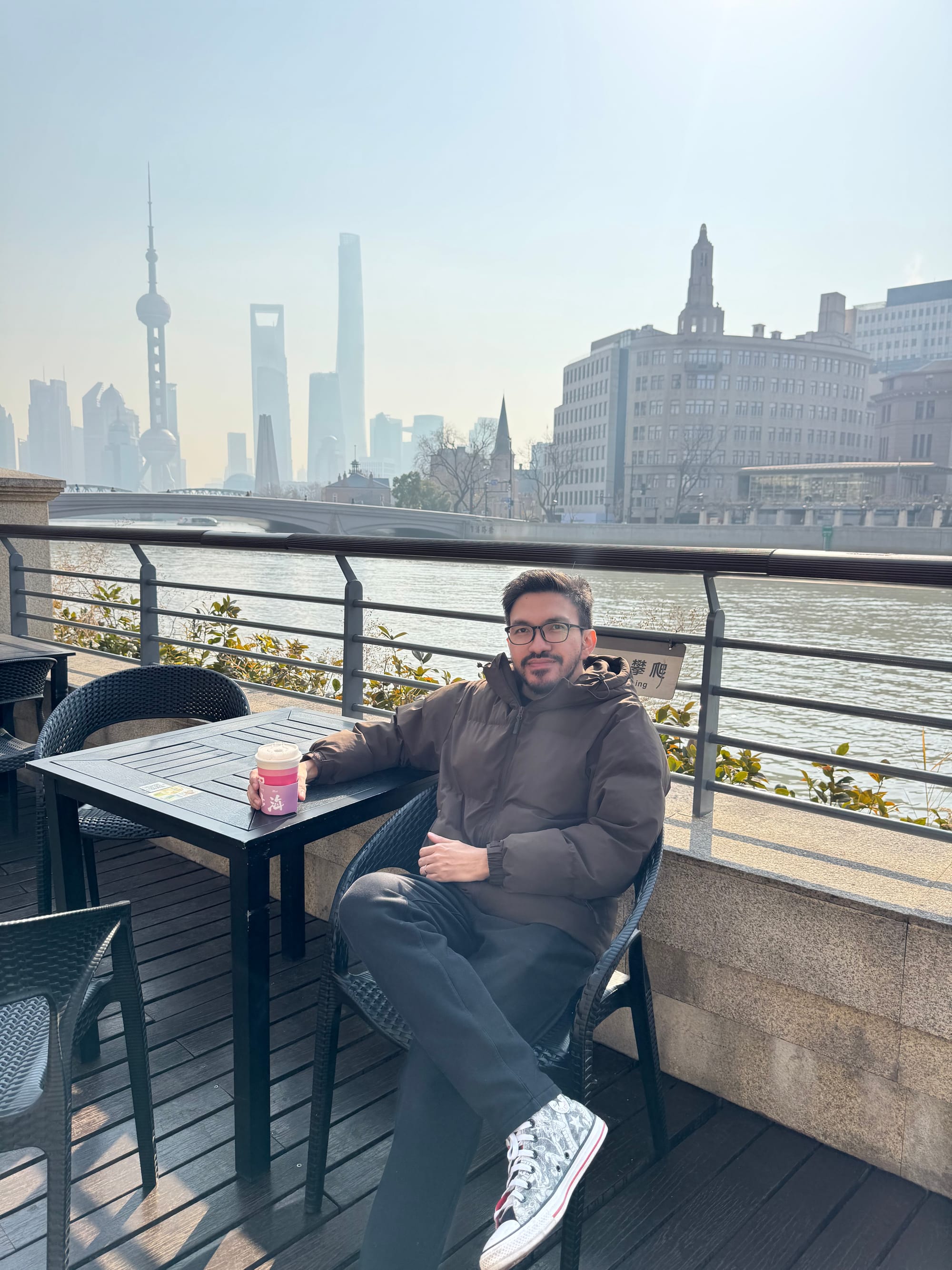
The Huangpu river softly flowed as we sipped tea along the famous area of The Bund where futuristic buildings, including the Oriental Pearl TV Tower, faced remnants of the colonial-era Shanghai on the other side. There's a strange feeling of being tugged by time in this liminal space between past and future.
Is Shanghai or China itself trying to decide whether to stay in the past or move on?
In Putuo District where the famous "1,000 Trees" grow on top of terraces, we relaxed in a park bench while watching families take a walk beside the Suzhou Creek.
Along Wukang and Anfu Roads in the former French Concession area of the city, we took our time snapping photos, taking in the picturesque architecture defined by Haipai (Shanghai's unique "East meets West" culture).
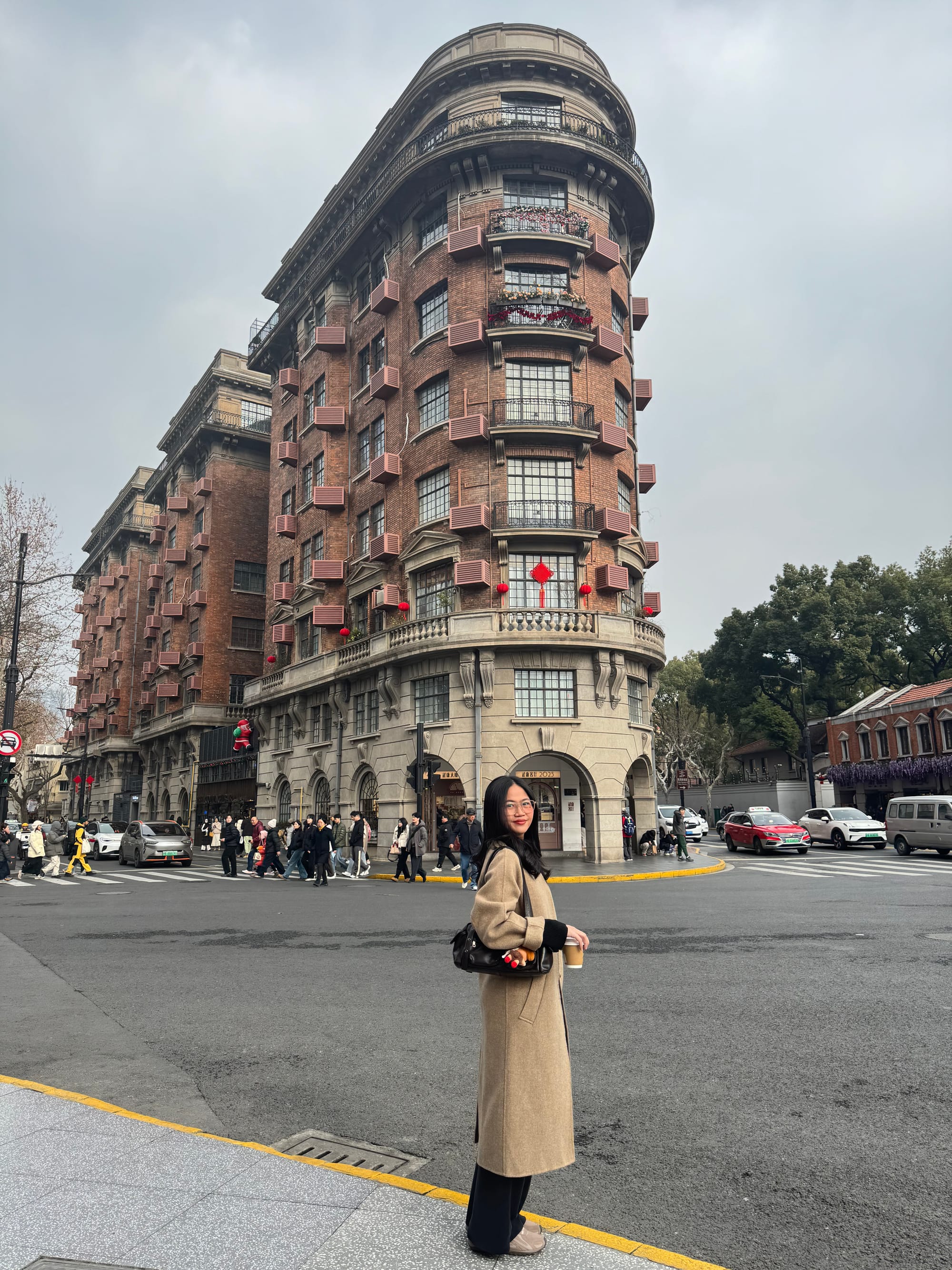
It was cold with temperatures fluctuating between 1° to 8° at daytime, and the chill pierced through my gloves and my Chuck Taylors.
When it got too cold, we loved warming our bellies with traditional Chinese desserts. Our favorite was a mix of red bean, cassava, jelly, and other ingredients which you poured a cup of warm milk over. It was soul-satisfying and very much like the Filipino ginatan.
My wife noted how tranquil the experience was, like we didn't feel any pressure to do something or check out something or make something happen, like in Japan. I felt that had to do with Tokyo being denser, even though Shanghai had a much wider area. Tokyo's streets are tightly packed with buildings while Shanghai spreads out like it can afford to. In Tokyo, especially in heavily touristed places like Shibuya and Akihabara, you'd always find yourself in a sea of people. In Shanghai, even in places where people shopped like Xintiandi and Tianzifang, there was more than enough breathing room.
Though we were fully prepared for it, we never had to ride a single train because booking a car through Didi was just too easy. I didn't even use the Didi app itself, but the Didi mini-app on Alipay. Fares were as low as CNY 17 (PHP 150) and rarely got expensive. Interestingly, transportation is much cheaper than Grab or Angkas in the Philippines. We even went to Disneyland on Didi. This was a huge deal for us as we always had to bring a stroller and bags for ourselves and our kid.
There were also many convenience stores, including FamilyMart, Lawson, and 7-Eleven where you could buy cheap dinner or bread for breakfast the next day. We never found ourselves lacking anything important.
The Peking Duck
One of the items on my wife's checklist was to eat a Peking duck.
For that, I used Dianping, an app where you can find user reviews for all kinds of food and drinks. It's in Mandarin, but translator apps helped me learn the overall structure, and once I got the hang of it, finding the best options for dishes or beverages we were craving was quite easy.
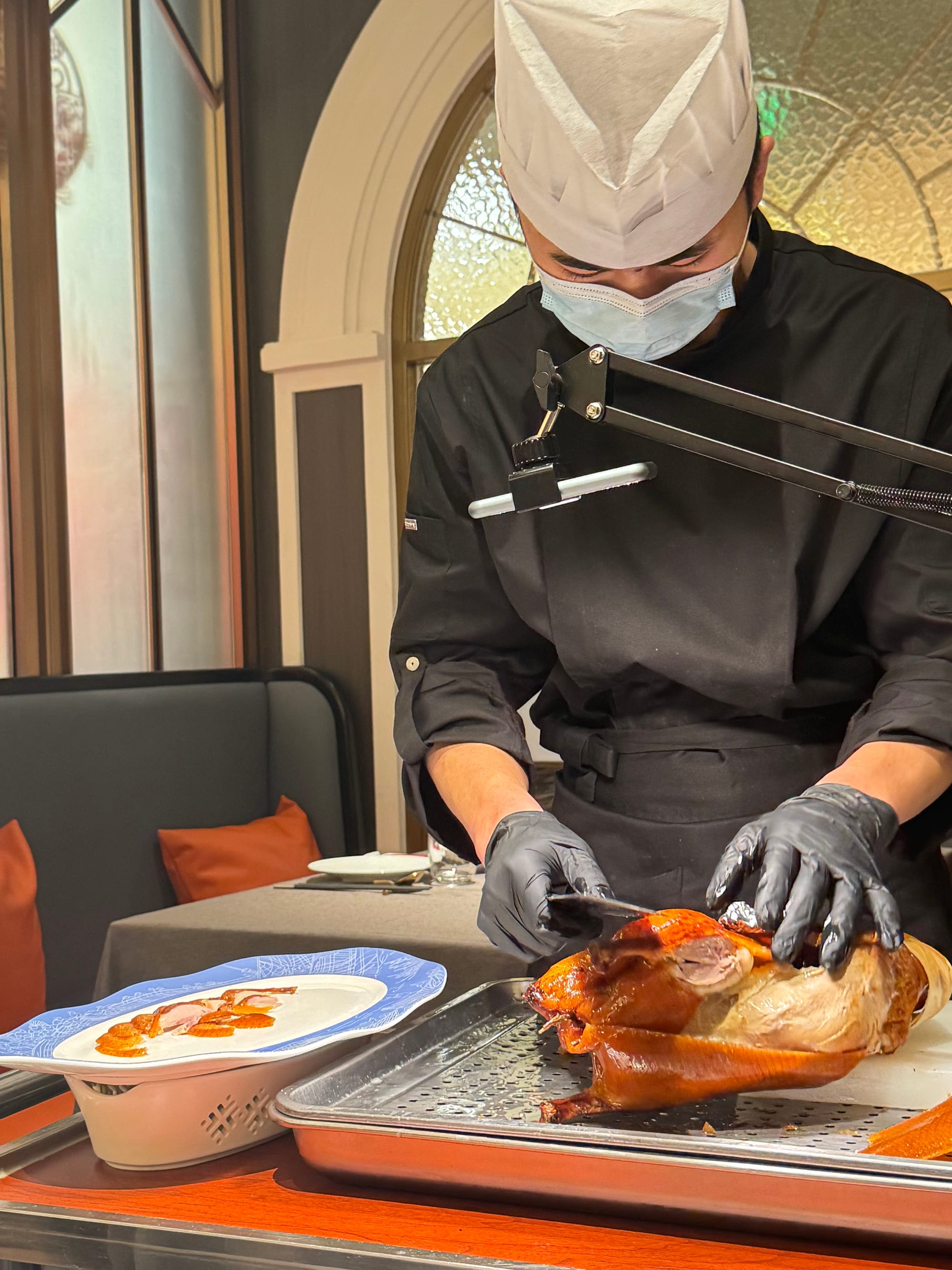
Shanghai Guniang (translator apps show it as "Shanghai Girl") along Nanjing Road served us a duck we will never forget. I have never eaten a Peking duck before (also called a "Beijing duck"), but hailing from Angono, Rizal known for its tasty "fried itik (fried duck)," we definitely had expectations. We were sitting at a circular Chinese table having already placed our order using a tablet, and were surprised a few minutes later when a chef appeared pushing a small table where the glistening, reddish brown duck was ready to be prepared. We all let out an audible "Wow."
With precise, deft strokes, the chef nimbly cut the whole duck, slicing it in thin strips, and then throwing away the bony part. When the "presentation" ended, we proceeded to have a bite.
We were floored.
The duck's skin was thin and crispy (it's advertised as like "glass"), the thick layer of fat underneath it was squishy, and the meat was soft, steamy and bursting with flavor. It was, without question, the best duck dish I've ever tasted in my life, and one of the most delicious preparations of meat I've ever had. Both my wife and my daughter loved every single bite, and the restaurant staff looked happy that we were happy with our meal.
But it's not just the Peking duck that we enjoyed eating in Shanghai. We also found the pan-fried buns (shengjianbao) and xiao long bao with crab roe and pork at Tianzifeng to be absolutely amazing.
Chinese cuisine is highly diverse, and we found menus specifying cuisines such as Shandong, Sichuan, Cantonese, and more. This is where it got tricky sometimes because there are cuisines with very intense flavors that are not exactly compatible with our Filipino taste. My wife didn't like a plate of pork because it was too "Chinese" and one restaurant served us a boiling pot of squid and peppers that singed our tongues. But overall, as long as we were careful about the food we were ordering, we often got dishes that tasted great and expanded our palate.
The People
But perhaps the most surprising thing for us was just how dead wrong we were about Chinese people, at least those we interacted with. We were prepared to deal with rudeness as that's usually the main thing you hear from families and friends who have had interactions with "mainlanders" in Beijing, Hong Kong or other places where they could be found. But everywhere we went in Shanghai, people were very friendly, warm, polite. In an Arabica, a man offered to help me lift the stroller through the door. Delivery riders smiled and waved at our daughter. Chinese parents also allowed their children to play with her even though she's clearly speaking English.
They tried their best to say "thank you" and "you're welcome" even though most of the time, they only managed to say "Bye bye."
Hotel staff, from the front desk to the sanitation personnel, all smiled at us and tried their hardest to serve us promptly even through the language barrier. Every single day, our room was supplied with multiple bottles of water free of charge, along with clean towels, coffee, and snacks.
They sent robots to our room, too, for quick requests like sugar and milk. Our daughter called them "R2-D2."
It's worth noting that we definitely don't look Chinese, and I was stopped a few times in Nanjing Road by vendors offering some sort of service because I was easy to pick among the crowd. And I'm aware these are all anecdotal, and maybe just good business practices. But really, our gut feel is just the truth is plain and simple: Shanghai citizens are generally nice. As nice as the Japanese, and maybe even nicer than other people from other countries we've been to.
A TV Channel That Made Me Pause
As I said, this was not supposed to be a travel guide to Shanghai. It's a way for me to recount my feelings and experiences about the place as I think those are important in regarding China—the country and its people going forwards.
It's crucial to qualify, despite being obvious, that Shanghai is not all of China. It's one of the most forward-looking cities, and perhaps the most open to foreigners. That may inform the overall attitudes of its residents. There are Starbucks and McDonalds, Nike and Adidas. Without knowing any better, shopping malls look just like any other shopping mall in the Philippines, Japan, South Korea, or Taiwan.
But even as I say those words, I find myself considering whether it's even valid weighing the "forwardness" of a place through the lens of specific capitalist markers. Does China need to have the Starbucks and McDonalds of the world to belong?
Their own brands appear just as good. While lining up at the Tron Lightcycle ride in Disneyland, I watched young people chat with their friends and take short-form videos using their phones. There's virtually no difference between the apps they're using and ours.
"But they're censored and controlled" is the knee-jerk rebuttal.
I wonder how much of that is true. As I flipped through TV channels in our hotel room, I found one—just one—news channel in English. It's a current affairs segment where the Chinese host interviewed different experts from Europe, America, and even the Philippines (from a China-affiliated organization) about President Donald Trump's remarks in the recently concluded Davos World Economic Forum.
As Trump called green energy a scam and criticized European allies in a variety of ways, other countries seem to be rethinking strategic partnerships.
The host asked a pointed question, "Are other countries beginning to see China in a new light?"
It struck me in two ways: one, while this channel or news program was in English, it was clearly accessible to everyone. So the Chinese do seem to have access to what's happening outside albeit probably in a carefully curated manner. The news program was most likely state-sponsored and it had a pro-China angle, but simply narrating what Trump said at Davos, and his administration's actions in America (the ongoing issue about ICE) need very little "perspective shifting" to put the USA in a negative light.
Two, the host's question may reveal a lot about what China wants: global acceptance.
For years, it appears to have poised itself as an alternative to the American way, and seems to be more closely aligning with Europe as it diverges more from American policies. But the long-held ideas about it—about the Communist Party, its bloody history, its supposed undemocratic practices, and maritime disputes with its Asian neighbors, among others—are trappings it struggles to shed as it tries to embrace the role of a leader. Because nobody will accept them as one until a great amount of these issues are resolved and more people come to understand that they have built a society as functionally good as others that are more popular.
For my part, I think Filipinos shouldn't close their mind to what China says or has become—yes, even through the vitriolic discourse that has real consequences for our people.
Because at the end of the day, this country has, in many respects, made it work. We saw a little part of it while there.
There may be lessons to learn here for those willing to listen.
But at the same time, drawing conclusions about a country is an extremely hard thing to do since countries are made up of more than just people—more than just the drivers, the staff of a hotel, families in a park—as friendly as they could be; they're also made of national ideals, culture, and military aspirations. And it's especially hard to see a people as just a people when their country's government supports firing water cannons at small fishermen and our tiny coastguard's boats in our own waters.
There's a naive part of me that hopes that someday, more people get to taste that divine Peking duck without all the baggage.
I'm aware we're a long way from there.